

Whatever She Wore: Designer Elsa Schiaparelli defines the 1930s
Originally published in
AUTUMN/WINTER, Issue 10
by Linda Falcone

Vogue 1940, Schiaparelli wearing black silk dress with crocheted collar of her own design and a turban
Ph. Fredrich Baker – Condé Nast, via Getty Images
Any girl who tries to plant seeds in her mouth and ears, in an attempt to make morning glories grow on her face is worth befriending. Therefore, let’s call Elsa Schiaparelli, Schiap, just as her friends did, for she didn’t think the name Elsa suited her. Schiap’s childhood aim was to beautify her face, because in her mother’s eyes, she was the ugly one – whose features and body were too ‘angular’ compared to those of her prettier sister. Luckily for us, her childhood beauty scheme failed, and in 1924 – after Schiaparelli broke with her tight-laced family and moved from Rome to Paris, she began making clothes modelled on her own body.
Although she became one of the world’s most renowned designers of the interwar period, Schiap had no training in patternmaking or the fundamentals of fashion design. Even at the height of her success in the 1930s, she ‘built’ the bulk of her dresses on the body, using intuitive draping. Her entrée onto the Paris fashion scene was via sportswear, a still largely untapped market for women at the time, although her pour le Sport line was more suitable for leisure than actual sport. Her Bow-Knot Sweater (1927) – made with a double layered stitch developed by Armenian refugees in Paris – was considered a trompe l’oeil masterpiece, that, being honest, provides no big thrill for today’s wearers.
That the 1930s were a drab decade whose fashion legacy pales in comparison to that of the Roaring Twenties is a misconception, considering the garments Schiap produced for her salon at 21 Place Vendôme in Paris. The excesses of great-Gatsby soirees were waning – but she added evening wear to her collection in 1931 and made history. The women in the room were actually wearing the party. Yet, her conversation-piece fashions were more than a wink of mischief. They sprang from a brand of irreverence strong enough to sever the age-old shackles of prettiness. The designer’s Upside-down Shoe Hat’, a velvet ‘high-heeled’ cap conjured by Schiap and Salvador Dalí together, is a case in point. “The spirit of infectious good humor can be created even through women’s hats,” the designer wrote. “I like to amuse myself through some of my creations. If I didn’t, I should die.” The fun did not stop with hats, of course. Her lobster (and parsley) dress was another Schiaparelli-Dalí collaboration, released one year before Dalí was commissioned to create his famous Lobster Phone.
When the Duchess of Windsor, Wallis Simpson, arrived at a party in 1937 wearing that white silk gown, fashion’s surrealist fate was sealed. The rich, the royal, and the famous were willing to get on board. Weird was the new wonderful, but Dali was by no means her only artist partner. In Schiaparelli’s words, “Working with artists like Bébé Bérard, Jean Cocteau, Salvador Dalí, Vertès, Van Dongen; and with photographers like Hoyningen-Huene, Horst, Cecil Beaton and Man Ray gave one a sense of exhilaration. One felt supported and understood beyond the crude and boring reality of merely making a dress to sell.”

Installation view with Lobster Dress. Schiaparelli: Fashion Becomes Art, Victoria and Albert Museum, ph. Callum Walker
But sell she did, and Schiaparelli herself became her company’s best advertisement. Whatever she wore to jetsetter events made the headlines. She donned a surrealist Christmas tree costume for a ball in the late 1930s, which her rival Coco Chanel set fire to, after inviting Schiaparelli to dance with her. Chanel steered Schiap right into a candelabra on purpose, and guests dosed the burning costume with seltzer water to put the fire out. Apparently, no one was surprised by the attack. They all knew Chanel’s envy was such that she refused to even say Schiaparelli’s name, dismissing her as “that Italian artist who is making clothes”. Chanel’s snide remark, meant to stress Schiaparelli’s lack of training in design, actually did Schiaparelli a favor. She could operate completely outside the Parisian canon, as a foreigner who knew no rules – and an artist to boot. According to Yves Saint Laurent: “She slapped Paris. She smacked it. She tortured it. She bewitched it. And it fell madly in love with her.”
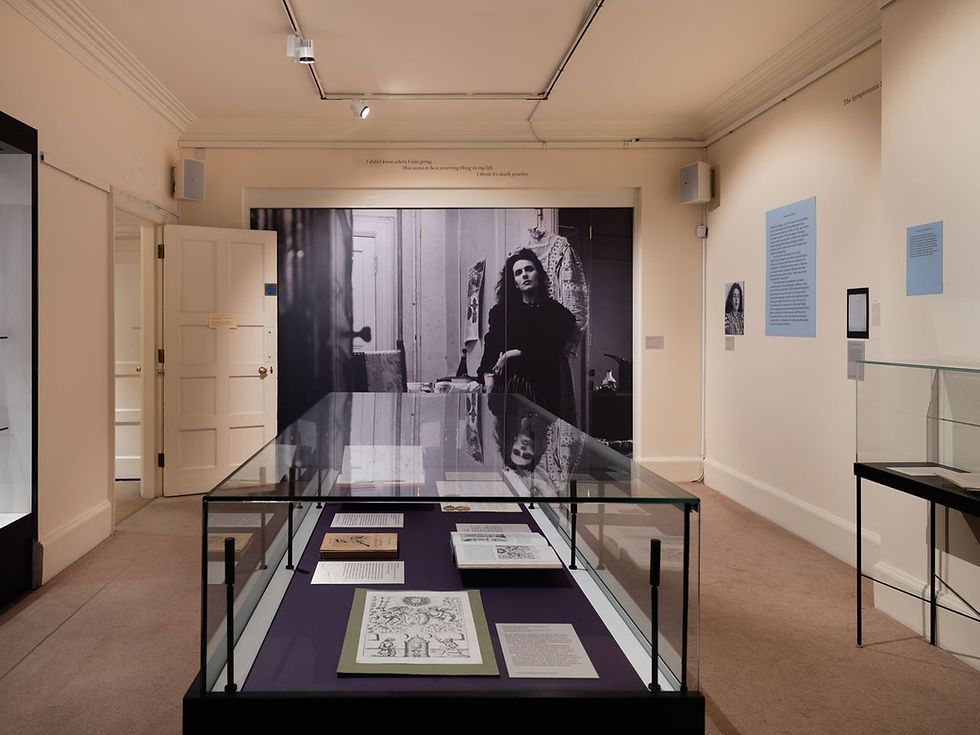
Not all of Schiaparelli’s fashions were an elegantly contrived display of irreverence. In fact, what is most striking about the lavish exhibition, Schiaparelli: Fashion Becomes Art, on show at the V&A until November 2026, is that all of her creations can actually be worn by real women – unlike the stunning fashion constructs produced by the Maison today, made mostly for runway waifs and to fit few others. Schiaparelli was worn by the wealthy, according to a 1933 article in The Daily News, but monied or not, they were still actual women – busy women, with places to go and people to see. “Every woman has at least one of Schiaparelli’s suits or frocks. She’s the big vogue today. Mme. Peralta Ramos (Millicent Rogers) wears a Schiaparelli suit around Paris... and so does Lady Davis and Mrs. Harrison Williams. But you can just look at the list of the Famous Forty and save me the trouble of putting down the rest of the names.”

Behind the scenes, Schiaparelli: Fashion Becomes Art. Fashion by Maison Schiaparelli
Daniel Roseberry, Victoria and Albert Museum. Ph. Callum Walker
Schiaparelli’s women were at the helm of big business and entertainment, like cosmetics magnate Helena Rubinstein, American publisher Caresse Crosby and fashion editor Daisy Fellowes. Many of the women Schiap dressed are directly responsible for the preservation of her legacy; the likes of oil heiress Millicent Rogers and actresses Marlene Dietrich and Ruth Ford all donated their Schiaparelli wardrobes to major museums. To Schiaparelli, the women mattered: “A dress cannot just hang like a painting on the wall, or, like a book, remain intact and live a long and sheltered life. A dress has no life of its own unless it is worn, and as soon as this happens another personality takes over from you and animates it, or tries to, glorifies or destroys it, or makes it into a song of beauty.”
Yes. And sometimes that beauty is sweeping, and other times it’s button-sized. In fact, before seeing the Schiaparelli show at the V&A in London, have a wander upstairs through the museum’s Jewel Room. Its sparkling display featuring 3,000 years of jewelry history will prepare the eye for the gleaming whimsy of Schiaparelli’s buttons. They are winning tokens on the fashion gameboard. They look like beetles or squirrels, violins and drums, peanuts, cauliflower and cabbages. There are dressage horses, acrobats on the climb, gold-rimmed shells, butterflies in flight, and even mermaids. When Schiaparelli earned herself the cover of Time magazine in August 1934, it boasted the following subtitle: “MM ELSA SCHIAPRELLI… glories the gadget, persecutes the button”.
In my mind, Schiaparelli’s ‘glory’ lies in her color. “Before me,” she writes, “everything was black or navy blue or gray or brown or beige, things like that, for daytime. I began using shocking pink and ice blue and all kinds of bright colors. And I dyed furs.” As a colorblind person, who cannot identify the million shades seen by ‘normal’ eyes, visiting Schiap’s show was liberating. No need to worry about the hues I can never see. But Schiaparelli did not only use unabashed color, she invented it. ‘Shocking pink’, her brilliant trademark shade coined in 1937, was intrinsically linked to her first fragrance line: “The name had to begin with S, as this was one of my superstitions,” she said. “Finding a name for a perfume is a complex problem because every word in the dictionary seems to have been trademarked. The color appeared to me in a flash, luminous, impossible, impudent, alive like all the light and the birds and fish of the world put together, a color of China and Peru, but not of the West. A shocking color – pure and undiluted. So, I named the perfume Shocking.”
The scent is no longer available for purchase, but you’ll know the color from Zsa Zsa Gabor’s Moulin Rouge dress, conveyed to the world thanks to Oswald Morris’s new Technicolor techniques that left cinema-goers gaping. It was 1952 and the last film in which Schiap’s fashions were featured. The shade was copied a year later for Marlyn’s iconic gown in Gentleman Prefer Blondes, not by Schiaparelli. She closed down her company in 1954. The world of fashion was not the same after the war, she said. Christian Dior’s ‘New Look’ had stolen the stage. She retired and wrote her autobiography Shocking Life, while the memories were still fresh. It is sprinkled with fashion advice for women. “A woman should buy mostly in one place where she is known and respected, and not rush around trying every new fad,” she wrote, or “She should buy little and only of the best or the cheapest.” Schiap’s writing is not dissimilar to her fashion. It is witty – even thought-provoking – just like her black crêpe Skeleton Dress, with the bones on the outside. LINDA FALCONE


Comments