.jpg)

A chance encounter with Juana Romani
In the article 'Sweet dreams and tragic heroines' Federica Parretti explores World Fair sweetheart, Juana Romani, portraitist and model.
Originally published in
SPRING/SUMMER, Issue 9
By Federica Parretti

Juana Romani, La fille de Théodora, 1892–1893. Private collection. Source: Wikipedia
My partner Stefano and I happened upon painter Juana Romani unexpectedly. We were traveling from Paris to the Normandy coast, after Covid-related travel restrictions had been lifted, eager for cultural discoveries and museum visits. On the outskirts of Paris, in Courbevoie, we found the Roybet-Fould Museum, housed in an elegant and eccentric pavilion built for Norway and Sweden at the 1878 World’s Fair. They were holding an exhibition dedicated to an Italian-French painter that piqued our interest: ‘Juana Romani, Model and Painter. An Absolute Dream’. Discovering her was rather dreamlike, in fact, and her story has stayed with me since.
Juana Romani, born Giovanna Carolina Carlesimo in 1867, in the town of Velletri, in Italy’s Lazio region, emigrated to Paris with her mother Marianna and her mother’s partner, Temistocle Romani, at the age of ten. In some ways, her story reflects that of many female painters of her time, who made their debut in the artworld as models and muses. Yet, Romani’s paintings and her personality are unique, and they stay with you, like a spell.
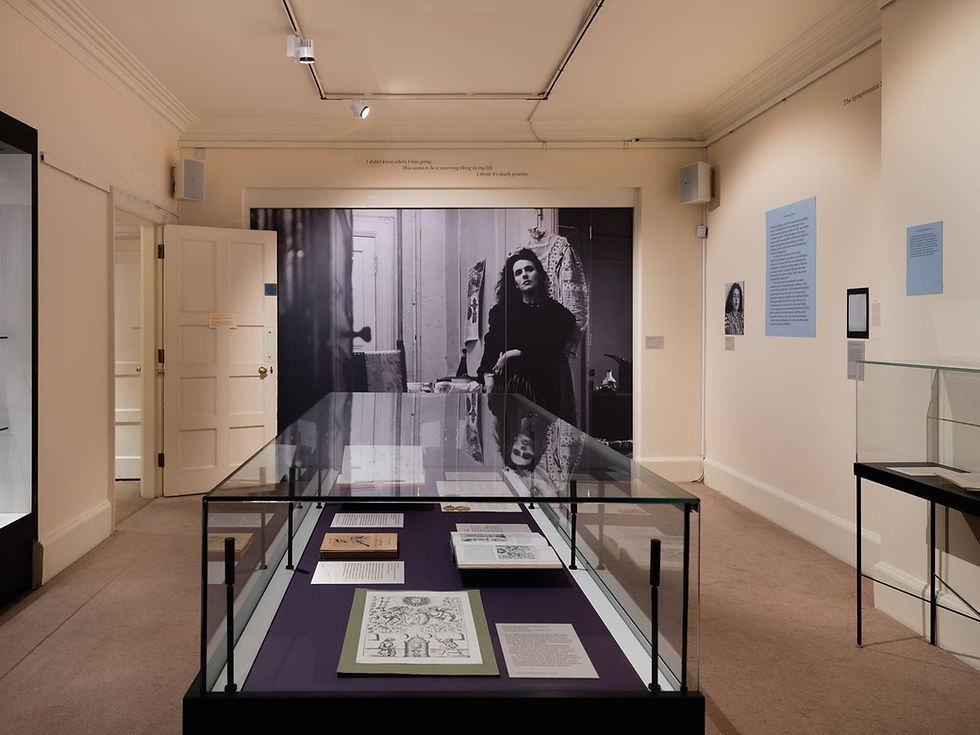
The exhibition unfolded in wood-panelled rooms, akin to a giant dollhouse. Our footsteps creaked on the wood floors, as we made our way through, stopping in front of her large canvases depicting mostly self-portraits of the artist as a heroine or historical figure, and other female models – often foreigners like she was – wrapped in lavish fabrics, sublimated by light and vivid hues. On canvas, she captured figures who became myths and women immortalised by history and literature, but her characters’ expressions exude a profound sense of unease and the need for recognition, a defining characteristic of the painter herself.
The exhibition’s first rooms recounted her early period: Carolina, still a teenager, began her career as a model at the Colarossi art school (where her mother had posed) before moving on to studios of fin de siècle Paris, such as those of sculptor Alexandre Falguière, or painters Jean-Jacques Henner, Carolus-Duran, Victor Prouvé, Jean-André Rixens, Victor Peter and Ferdinand Roybet.

Ferdinand Roybet, Portrait of Juana Romani, 1891, formerly at the Roybet Fould Museum, Courbevoie, inv. 219. Stolen in 1981. © Courbevoie, Roybet Fould Museum, ph. Giraudon
She grew up in the eyes of the men who portrayed her, feeding off their gazes. Courageous and eager for knowledge, she devoured the books left sitting on tables in the art studios where she modelled, studying the subjects who would later become her heroines – biblical or mythological figures, often classical and Italian. She observed the lines and gestures of preparatory drawing and learned the intricacies of colour composition, from pigment preparation to mixing on the palette. She sensed the light encompassing her in her nakedness, instinctively understanding tonal changes and the rendering of shadows.
She received a unique education that found fertile ground in her innate intelligence; it was rooted in the cultural contacts she made, but also fostered in late childhood, through her stepfather’s mentorship, which led her to read and write in Italian and French at a young age. Her thirst for independence pushed her to experiment on the opposite side of the canvas – a bold move for the time – supported first by genre painter Jean-Jacques Henner, and then by her teacher and lover Ferdinand Roybet, a historical and costume painter, who guided and encouraged her throughout her life.
At seventeen, she changed her name, a decisive step in asserting her identity: Giovanna Carolina became Juana, perhaps inspired by a heroine in her books, and, in a nod to her Italian roots, she kept the surname of her stepfather Romani, a cornerstone in her life.
Romani’s fame grew with the advent of international exhibitions. In 1889, she represented Italy at the World’s Fair, receiving important recognition; the following year, she exhibited at the Paris Salon. Until 1903, she was often present as both a sitter and as a portraitist which further boosted her fame, causing her to be considered the artist of the moment. Along with her renown came the pressure to live up to expectations and to bear the weight of criticism in a period that saw great changes in painterly styles and public tastes. It may have been this pressure that triggered her first signs of mental fragility, which would worsen in the years that followed, with frequent crises and hospitalisations, until her tragic death in 1923, in a care home in Château de Suresnes, at only fifty-six years old, alone and destitute.
One work in the Roybet-Fould exhibition struck us in particular: La fille de Théodore, painted in 1892. Imbued with orientalism, the painting conveys a dichotomy between attraction and suspense, as you might feel before a snake staring into your eyes. Its very young model is already aware of her seductive power, which the artist emphasises in the tilt of her head, silhouetted against the brocade background. Behind a childlike fringe there is a glint in her eyes. The two brooches that hold her rich cloak in place seem to almost pierce her pale flesh, and contrast with the heavy fabrics draped over her, more to cover than to dress.
A few years earlier, in Hérodiade (1890), Juana had portrayed herself as a biblical figure. Here, we see her defiant and complacent gaze, heightened by the position of her arm on her hip. The shadows of her hair on her face increase the impact of her eyes, which seem to break through the darkness and reach outwards with greater force, like a ray of sunlight shining through the clouds. The painting is exhibited in Mougins at FAMM, the women’s art museum founded by Christian Levett, whose collection boasts two other portraits by the artist.

Juana Romani, Portrait of a Redhead Woman Seen in Profile
FAMM (Female Artists of the Mougins Museum) / The Levett Collection
After our first encounter with Juana Romani, Stefano and I discovered that she has been increasingly studied in Italy in recent years, finally emerging from obscurity, and revealing herself to the international art public in numerous publications. This winter, to further connect with Romani, we travelled to Velletri, her hometown. Leaving Rome along the Appia Antica, the landscape opens up into a timeless dimension. Crossing the Castelli Romani, lakes and woods alternate with ruins and pleasant villages, but also with ungainly buildings and abandoned warehouses. Velletri stands on a hill overlooking the Agro Pontino plain. Arriving at the highest square, marked by three imposing works of architecture – the Town Hall, the Prison, the Archdiocese. They seemed to stand in defiance of one another, reminding us of the dominance of their three powers – the political class, the judiciary and the clergy – which governed the city over the course of centuries. We wondered where to look to find traces of the painter. We headed to the large municipal building that houses the Oreste Nardini Civic Archaeological Museum, where two young women at the front office allowed us to consult and photograph a rare copy of a publication on Juana, never intended for sale. It is the commemorative catalogue of the last exhibition dedicated to her, in 2017, at the town’s Convento del Carmine.
We are disappointed when they tell us there are no works by Romani on display in Velletri. During her trip home in 1901, after participating in the Venice Exhibition, Juana promised the mayor she would donate her entire collection to the city to create a civic museum. After her death, however, her works were sold at auction in France and dispersed. What we did find was that a significant financial donation she made contributed to the opening of a local art school named after her, and to the establishment of an award for deserving young students. They are still in existence today.
The idea of finding the Romani family home was appealing to us, and that’s where we headed next. I imagine the little family stayed at the vast Palazzo Romani Adami, for a short time before their departure abroad. Juana’s mother, Annamaria – or Marianna – had arrived in the town, after her ‘past-life’ as a peasant in the marshy and insalubrious flatlands of the Agro plain, where large swathes of land were owned by the Romani family, one of the area’s most influential landowning clans. With her child in tow, she had fled from her husband, Giacinto Carlesimo, who was wanted by the police and on the run for banditry. That is how Marianna ended up in service at the Romani family palace.
No doubt tensions were high when the dynasty’s sensitive seventh son fell in love with the comely, spirited Marianna, who wanted a different fate for herself and her daughter. The union was met with moral disapproval and concerns over inheritance. In a province where everyone was raised to observe and to judge, that intertwining of different social classes was difficult to sustain. Hence, the three left for France.
I like to imagine that this departure was not only driven by necessity. Perhaps it was also fuelled by little Juana’s desire to make her mark in life. In my mind’s eye, I see her playing under the large centuries-old oak tree in the garden of the imposing palace, or in Piazza San Martino, gazing towards the plain below – the harsh land of her peasant childhood. She may have come to see her rough native land as the source of her strength, rather than a collection of memories to be hidden or forgotten. I imagine Juana with her eyes closed, dreaming of carving her name in the annals of history, of having her tenacious story come to light, alongside others of her native land, so often told from the male perspective. From farmland, to palazzo to painting studio, this heroine has her own story to tell. FEDERICA PARRETTI


Comments